

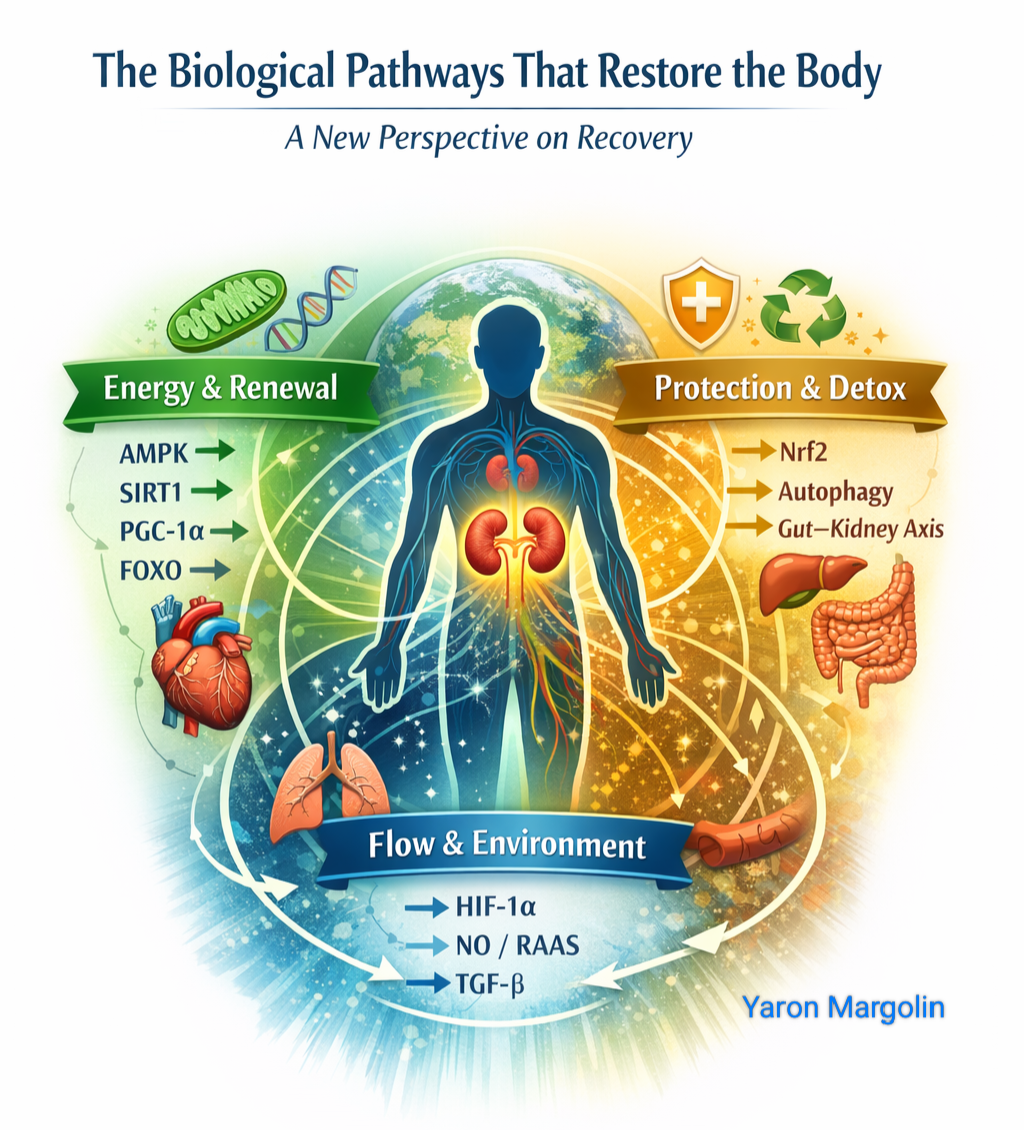
1. Energy & Renewal
These pathways focus on metabolic health and cellular energy production:
AMPK: Acts as a "metabolic master switch" that senses low energy levels and activates pathways to generate ATP (energy).
SIRT1: A protein (sirtuin) known for its role in cellular aging, DNA repair, and protecting cells from stress.
PGC-1α: The central regulator of mitochondrial biogenesis, helping the body create new "power plants" within cells.
FOXO: Transcription factors that regulate genes involved in cell cycle arrest, DNA repair, and resistance to oxidative stress.
2. Protection & Detox
These processes are responsible for cleaning the cellular environment and defending against damage:
Nrf2: A master regulator of the antioxidant response, triggering the production of protective enzymes.
Autophagy: The body's "recycling" mechanism, where cells break down and remove damaged components.
Gut–Kidney Axis: Refers to the complex bidirectional communication between the intestinal microbiota and kidney function, crucial for systemic detoxification.
3. Flow & Environment
These pathways manage how the body adapts to its internal environment and maintains circulation:
HIF-1α: A protein that allows cells to survive and adapt when oxygen levels are low (hypoxia).
NO / RAAS: Nitric Oxide (NO) promotes vasodilation (blood flow), while the RAAS (Renin-Angiotensin-Aldosterone System) regulates blood pressure and fluid balance.
TGF-β: A signaling protein involved in many cellular processes, including immune response and the healing of tissues.
Yaron Margolin is known for his research into kidney rehabilitation and natural healing methods, emphasizing how these specific molecular pathways can be influenced to reverse chronic conditions.
The Biological Pathways That Restore the Body and Drive Recovery Beyond Drug-Based Treatment
Yaron Margolin
🇬🇧 Understanding Intrinsic Regulatory Mechanisms:
📘 Atlas of Intrinsic Repair Pathways
A Deep Biological Framework for Kidney and Systemic Recovery
✍️ Introduction
This article expands the previously presented three-axis model of intrinsic repair mechanisms and provides a deeper biological framework for understanding how the body maintains, protects, and restores function.
Rather than viewing chronic disease solely as a process of damage accumulation, this perspective focuses on the dynamic network of biological pathways that regulate energy, cellular protection, and physiological flow.
Understanding these pathways helps bridge the gap between molecular biology and practical recovery-oriented thinking.
🧭 Conceptual Framework
The biological processes involved in kidney function and systemic health can be organized into three interconnected axes:
- 🔋 Energy and Regeneration
- 🛡️ Protection and Cleansing
- 🌊 Environment and Flow
Each axis represents a cluster of pathways that work together to sustain cellular function and enable adaptation under stress.
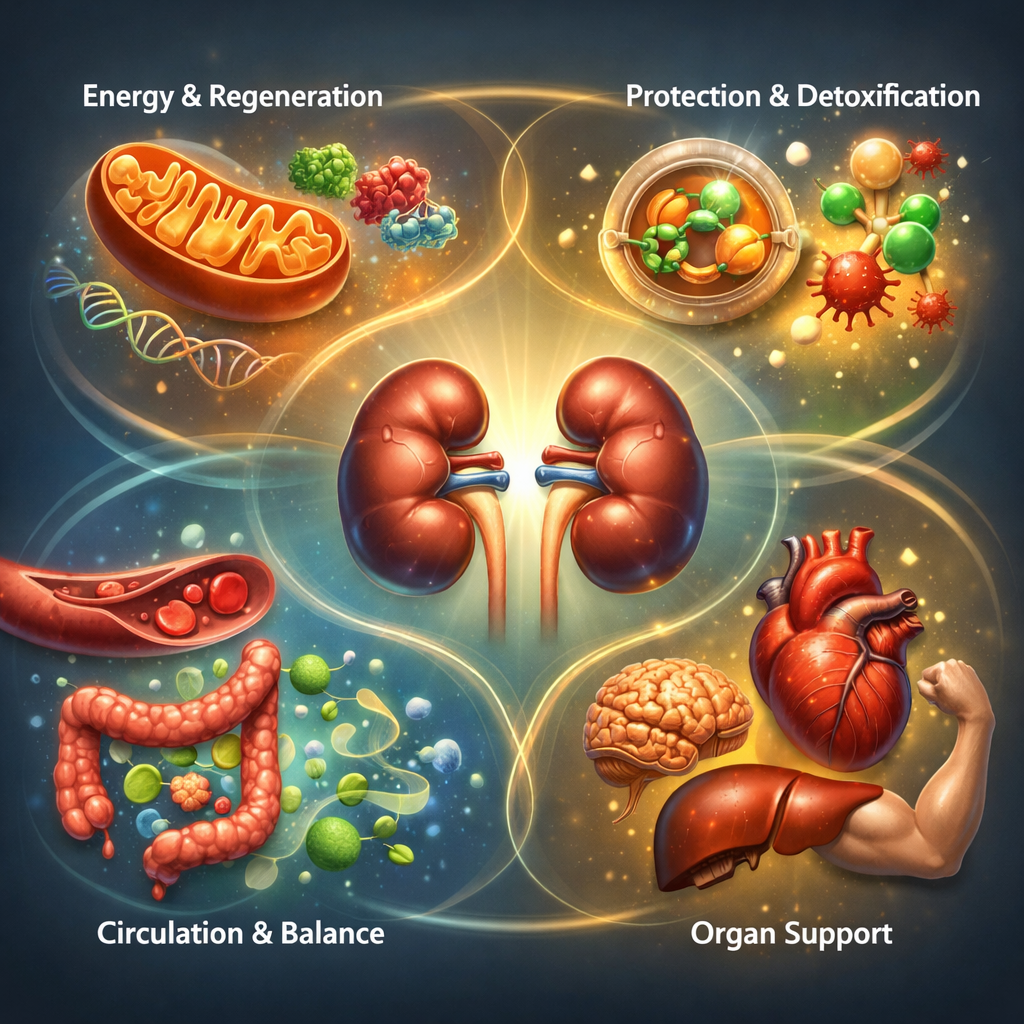
🔋 Axis 1: Energy and Regeneration
AMPK → NAD⁺ → SIRT1 → PGC-1α → FOXO
Core function: Cellular energy sensing, mitochondrial renewal, and stress adaptation
- Promotes mitochondrial biogenesis
- Enhances cellular survival pathways
- Reduces oxidative stress
- Supports podocyte and tubular cell integrity
Mechanistic insight:
AMPK activation under low-energy states increases NAD⁺ availability, activating SIRT1, which in turn regulates PGC-1α and FOXO-driven gene expression.
Potential modulation:
Intermittent fasting, moderate physical activity, metabolic flexibility, polyphenols (e.g., resveratrol)
Additional organs:
Heart, brain, liver, skeletal muscle, lungs
Irisin / FNDC5
Core function: Myokine-mediated signaling between muscle and organs
- Supports kidney cell resilience
- Links physical activity to systemic repair
PPARα
Core function: Fatty acid metabolism in renal cells
- Prevents lipotoxicity
- Supports energy balance in tubular cells
🛡️ Axis 2: Protection and Cleansing
Nrf2–Keap1
Core function: Antioxidant defense and detoxification
- Activates genes for oxidative stress resistance
- Reduces inflammation
- Protects renal structures
Mechanistic insight:
Nrf2 translocates to the nucleus and induces expression of protective enzymes such as glutathione-related systems.
Autophagy / Mitophagy / TFEB
Core function: Cellular cleaning and recycling system
- Removes damaged mitochondria
- Maintains cellular homeostasis
- Prevents accumulation of cellular debris
Mechanistic insight:
TFEB regulates lysosomal biogenesis and autophagic flux.
Epigenetic Regulation
Core function: Long-term control of gene expression
- Maintains cellular memory
- Influences adaptation and repair capacity
Gut–Kidney Axis
Core function: Interaction between microbiome, inflammation, and toxin load
- Modulates systemic inflammation
- Influences uremic toxin production
- Supports metabolic balance
Potential modulation:
Prebiotic fibers (e.g., psyllium, resistant starch), plant diversity, targeted probiotics
🌊 Axis 3: Environment and Flow
NO / eNOS
Core function: Regulation of vascular tone and microcirculation
- Improves renal blood flow
- Supports endothelial function
RAAS
Core function: Blood pressure and fluid regulation
- Essential for perfusion control
- Chronic activation contributes to fibrosis
HIF-1α
Core function: Cellular adaptation to low oxygen (hypoxia)
- Promotes angiogenesis (via VEGF)
- Supports survival under reduced oxygen supply
- Facilitates microvascular adaptation
TGF-β / SMAD
Core function: Fibrosis signaling pathway
- Drives extracellular matrix production
- Central in chronic kidney scarring
Wnt / β-catenin
Core function: Developmental pathway reactivated in chronic injury
- Supports repair in acute phases
- Promotes fibrosis when chronically activated
🔄 Integrative Perspective
These pathways do not operate in isolation.
Kidney function — and systemic health more broadly — depends on a dynamic network in which:
- Energy regulation supports cellular viability
- Protective systems prevent damage accumulation
- Vascular and environmental factors enable proper tissue function
Disruption in one axis often propagates across the system, while coordinated activation may support recovery processes.
📊 Table: Core Biological Pathways and Functional Roles
To summarize the biological pathways discussed and their functional relationships, the following table provides a structured overview of key mechanisms involved in kidney function and systemic regulation.
📊 Table 1: Key Biological Pathways in Kidney Function and Systemic Regulation
To summarize the biological pathways discussed and their potential modes of modulation, the following integrative table provides a structured overview of the key mechanisms involved in kidney function and systemic regulation.
| Pathway | Primary Role in Kidney Function | Potential Modulation (Natural Interventions) | Additional Organs Affected |
|---|---|---|---|
| AMPK → SIRT1 → PGC-1α | Mitochondrial biogenesis; protection of podocytes and tubular cells | Resveratrol; light physical activity (e.g., walking); intermittent fasting | Heart, brain, liver, lungs |
| Nrf2–Keap1 | Antioxidant defense; detoxification; inflammation reduction | Sulforaphane (broccoli sprouts); curcumin | Gut barrier, liver, heart, brain, lungs |
| Mitophagy / Autophagy + TFEB | Removal of damaged mitochondria and cellular debris | Urolithin A (pomegranate derivatives); resveratrol; sulforaphane | Liver, heart, brain, lungs, gut |
| FGF23–Klotho | Phosphate–calcium balance; anti-fibrotic; anti-aging effects | Vitamin D3 (controlled dosing); resveratrol; sulforaphane; physical activity | Heart (reduced calcification), brain, lungs |
| Gut–Kidney Axis | Reduction of systemic inflammation; decreased toxin load (e.g., TMAO); gut barrier support | Sulforaphane; urolithin A; prebiotic fibers (psyllium, resistant starch); targeted probiotics | Gut, liver, heart, brain, lungs |
| HPT Axis (Thyroid) | Regulation of metabolic rate and mitochondrial activity (T3) | Resveratrol; sulforaphane; physical activity | Heart, brain, liver, lungs |
| mTORC1 | Regulation of cellular growth; chronic overactivation linked to fibrosis | Mild inhibition via AMPK activation (resveratrol; sulforaphane) | Heart, liver, skeletal muscle |
| Wnt/β-catenin | Chronic activation linked to fibrosis and podocyte injury | Resveratrol; curcumin; sulforaphane | Heart, liver, lungs, brain |
| NO / eNOS | Vascular dilation; improved renal blood flow; endothelial protection | Polyphenols (e.g., resveratrol); plant-derived compounds (e.g., Opuntia ficus-indica); bromelain (pineapple) | Heart, brain, lungs, liver, gut |
| Irisin / FNDC5 | Myokine-mediated protection of kidney cells; podocyte support | Physical activity; PGC-1α activation | Brain (BDNF), heart, liver, lungs |
| PPARα | Fatty acid oxidation in renal cells; prevention of lipotoxicity | Resveratrol; sulforaphane; physical activity | Liver, heart, brain |
| Epigenetic Regulation | Long-term gene expression modulation; cellular memory | SIRT1 activation (resveratrol); sulforaphane; physical activity | System-wide |
| Vitamin D / VDR | Direct activation of Klotho; podocyte protection; anti-inflammatory effects | Vitamin D3 (monitored dosing); controlled sun exposure | Brain, heart, lungs, gut, bone |
✔ Note
The pathways and interventions listed are based on associations reported in scientific literature and are presented for conceptual and educational purposes. They do not constitute medical recommendations.
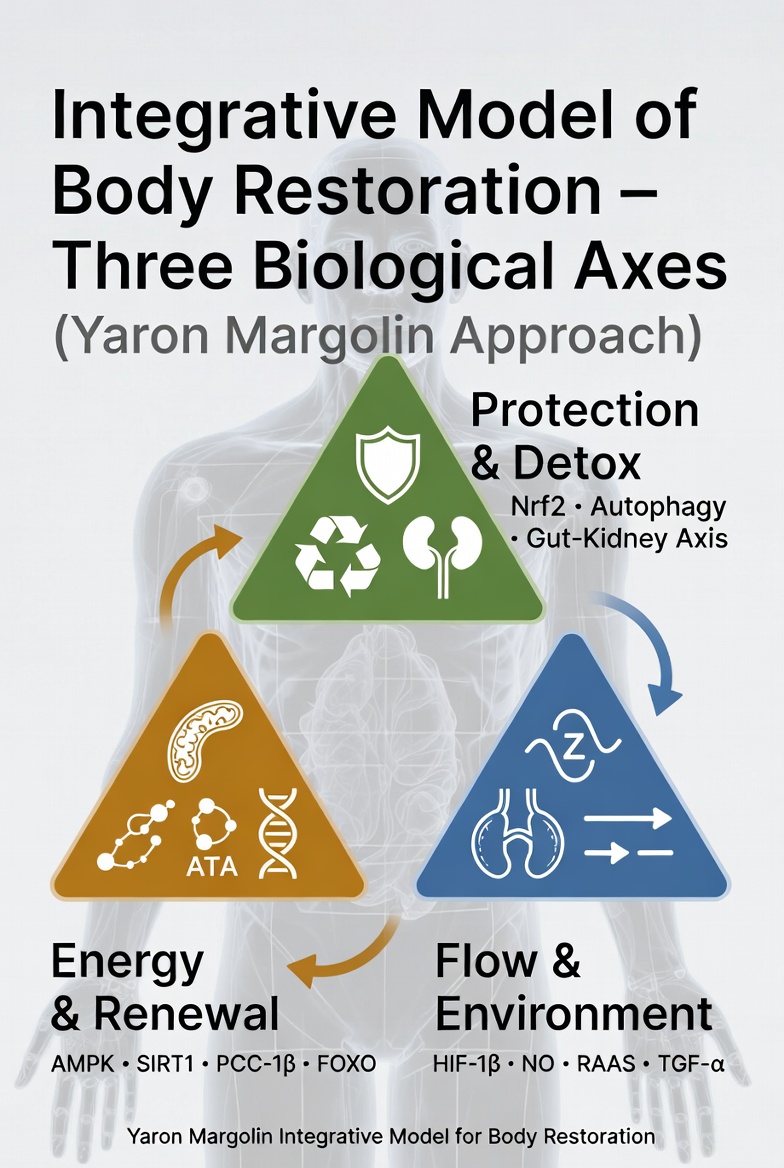
This diagram illustrates an integrative framework that connects cellular pathways, organ functions, and environmental factors to promote healing and systemic health. The three axes operate synergistically through bidirectional interactions.
🔚 Conclusion
Chronic kidney disease may be understood not only as a process of damage, but also as a decline in the activity of intrinsic maintenance and repair systems.
A deeper understanding of these biological pathways allows for a shift in perspective — from isolated mechanisms toward an integrated model of regulation, adaptation, and potential recovery.
🌱 Closing Perspective
Bridging the gap between molecular insight and lived experience remains a central challenge.
Yet within this complexity lies a simple idea:
The body is not defined only by what breaks down —
but also by what continues to regulate, adapt, and renew.
For support, inspiration, and success stories, visit yaronmargolin.com or explore the healing touch method at yaronmargolin.com or the "לחיצות ההחלמה" To contact us.
Important Note
The information presented here is for educational and philosophical purposes only and does not replace medical advice. Always consult a licensed healthcare provider familiar with your individual health status before making changes to your regimen.
- 📘 The Biological Pathways That Restore the Body: A New Perspective on Recovery
- המסלולים הביולוגיים המשקמים את הגוף: פרספקטיבה חדשה על החלמה
- אילוף הכליות הסוררות
- Kidney FailureTaming the Rogue KidneysVital Information
- Learn the 8 Principles That Revive Kidney Function
- Reconstruction of erythropoietin by the kidneys without drugs
- Six degrees of guilt – Why do people avoid living their dreams?
- Of sexual desire and the wish for intimacy and the two different languages in which they materialise:
- מוכרחים להתחיל בדיאליזה טרם נבחנה רמתו של גורם צמיחה פיברובלסט 23
- The day will come when we will sit in front of the fireplace
- איך לא להגיע לדיאליזה
- "הצלבת איברים – הדרך להחלמה ממחלת כליות קשה מאוד" – כאן..
- פחות מתים – טכניקת דיאליזה חדשה שבולמת את קצב המתים ומגבירה את ההישרדות בכשל כליות.
- הערכות שונות במדידת אשלגן בפלזמה שוללות לפעמים שלא בצדק יתר אשלגן בה – היפרקלמיה פסאודו היפרקלמיה – Hyperkalemia
- Regulationsmechanismen verstehen: Bedeutung für Nieren, Herz, Gehirn und weitere Organsysteme
- 📘 Карта путей восстановления
- Mapa de las Vías de Recuperación
- מיומטי תנועה – התקווה החדשה לחולי כליות: תרכובות שמחקות את צירי ההחלמה של פעילות גופנית
- הגוף יודע על המחלה: כיצד לזהות אותה באמצעות מבט עומק בבדיקות המעבדה ובתסמינים הגופניים
- איך התפתחו לחיצות ההחלמה בבית מחול ירון מרגולין בירושלים
- המזון הבסיסי והחומצי – מה כן ומה לא נכון. מה עובד על ההחלמה ומה הן אגדות? חומציות מגיעה מתזונה והיא קמה והורסת את הכליות
- הביוכימיה של ההחלמה: מפת העל של החיים
- השמנה בטנית – סטרס ביולוגי — מנגנון העל שמסביר השמנה בטנית גם בלי אכילת יתר. למה לא יורדים בבטן בתהליכי הרזיה מסודרים?
- על הגאונות והגאון
- מנגנוני תיקון פנימיים בגוף: מודל אינטגרטיבי להבנת תפקוד הכליות והמערכת כולה
- 🇯🇵 腎機能と全身の健康に関わる生体調節メカニズムの概要
- 🇬🇧 Understanding Intrinsic Regulatory Mechanisms:
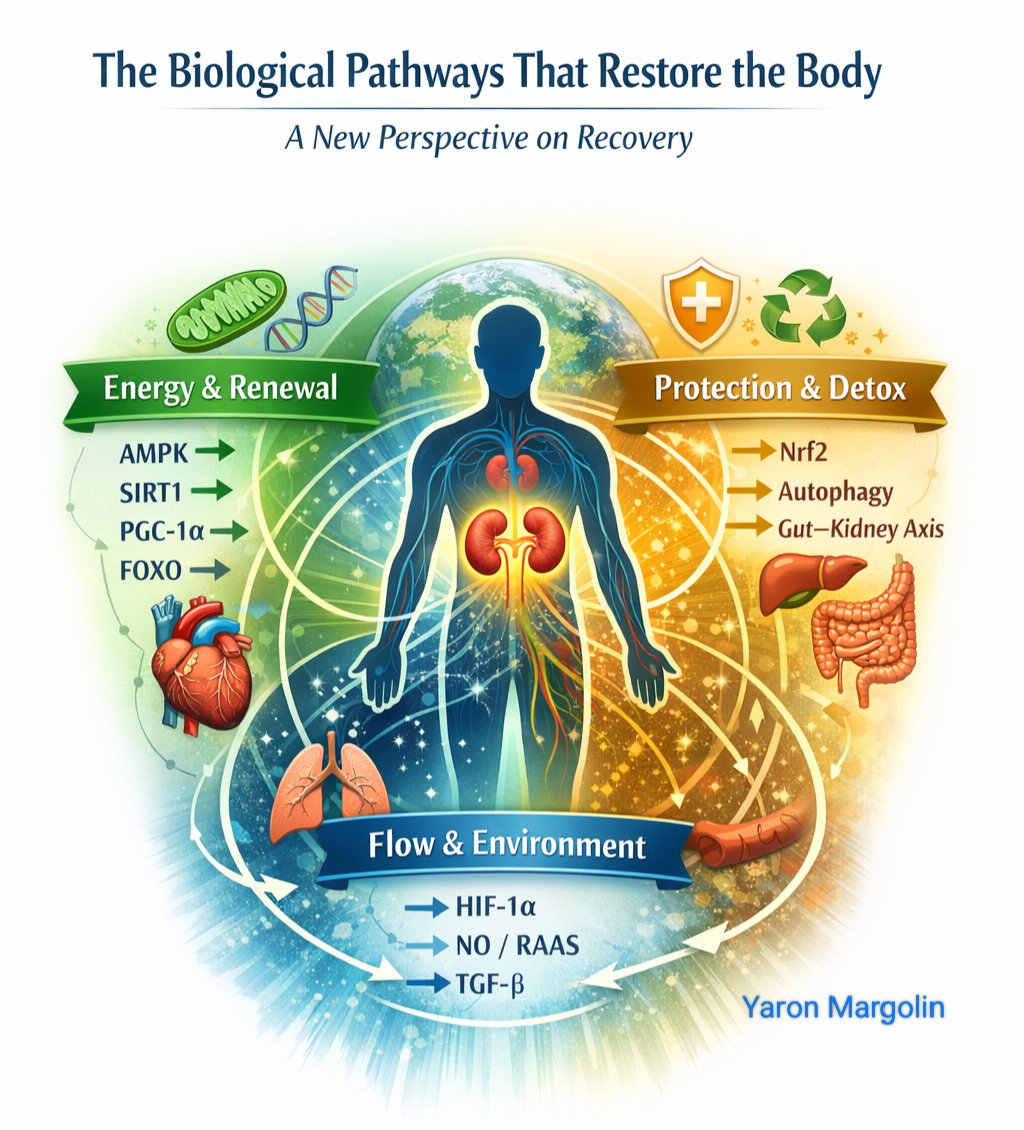
An integrative approach linking cellular energy metabolism, protection & detoxification, and vascular-environmental adaptation to support comprehensive body healing and renewal.
Energy & Renewal: AMPK, SIRT1, PGC-1α, FOXO
Protection & Detox: Nrf2, Autophagy, Gut–Kidney Axis
Flow & Environment: HIF-1α, NO, RAAS, TGF-β
כתיבת תגובה