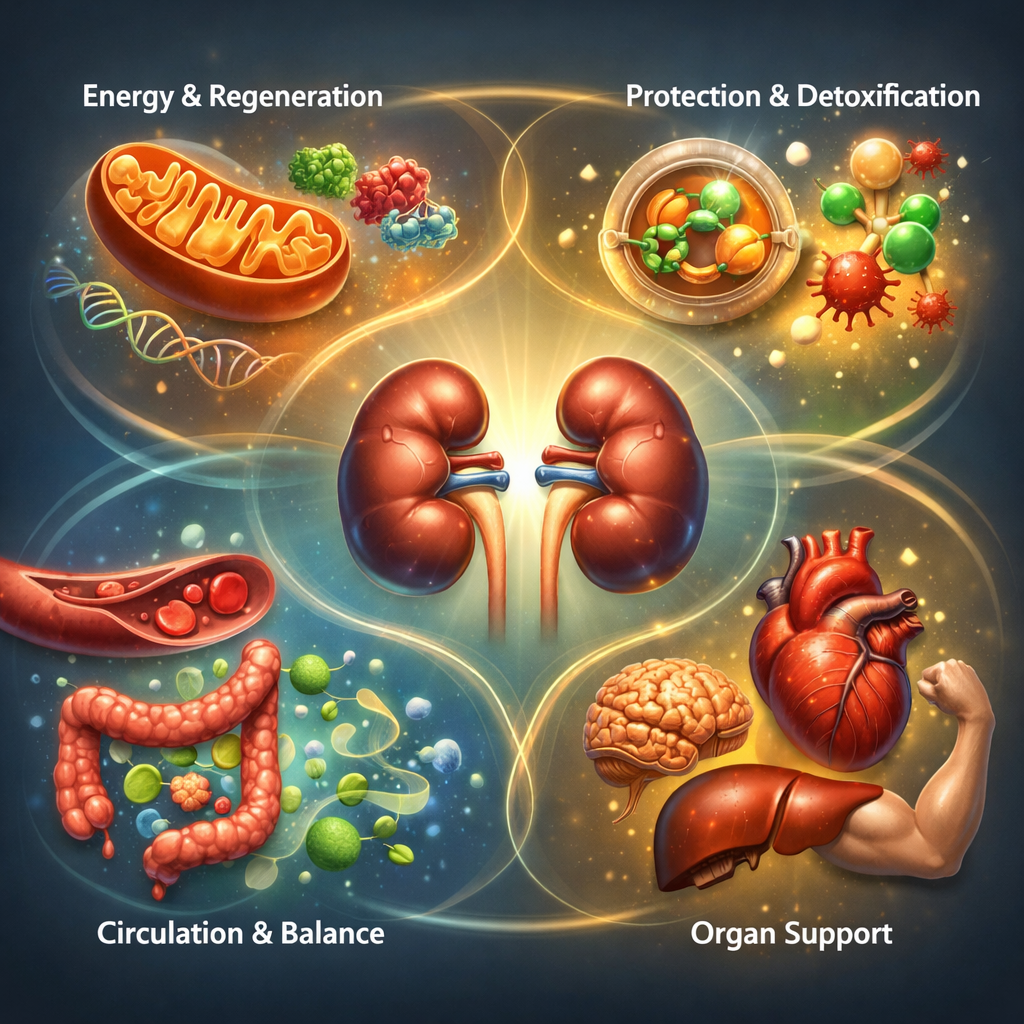
Figure: Schematic representation of the network of maintenance and regenerative mechanisms that support kidney function, including energy regulation, cellular cleansing and protection, maintenance of blood flow, and inter-organ interactions (including the liver, heart, brain, and lungs).
Relevance for Kidneys, Heart, Brain and Other Organ Systems
How the Body Activates Repair Mechanisms – with a Focus on the Kidneys
✍️ Personal Introduction
This article emerges from a long personal engagement with chronic illness and from a continuous search for pathways of recovery that go beyond merely slowing disease progression, aiming instead to understand how the body repairs itself, renews, and restores function.
Over the years, through practice, observation, and the study of scientific literature, a central insight has taken shape: the body does not operate solely through mechanisms of disease, but also through a complex network of maintenance, cleansing, and regenerative pathways.
When these pathways weaken, disease develops. When they are reactivated, a window for recovery may open.
The problem is not only the disease itself — but that we are rarely taught how and why the body stops repairing.
📄 Abstract
This article presents an integrative model for understanding chronic kidney disease (CKD), not only as a process of cumulative damage, but also as a decline in the activity of biological systems responsible for maintenance and regeneration.
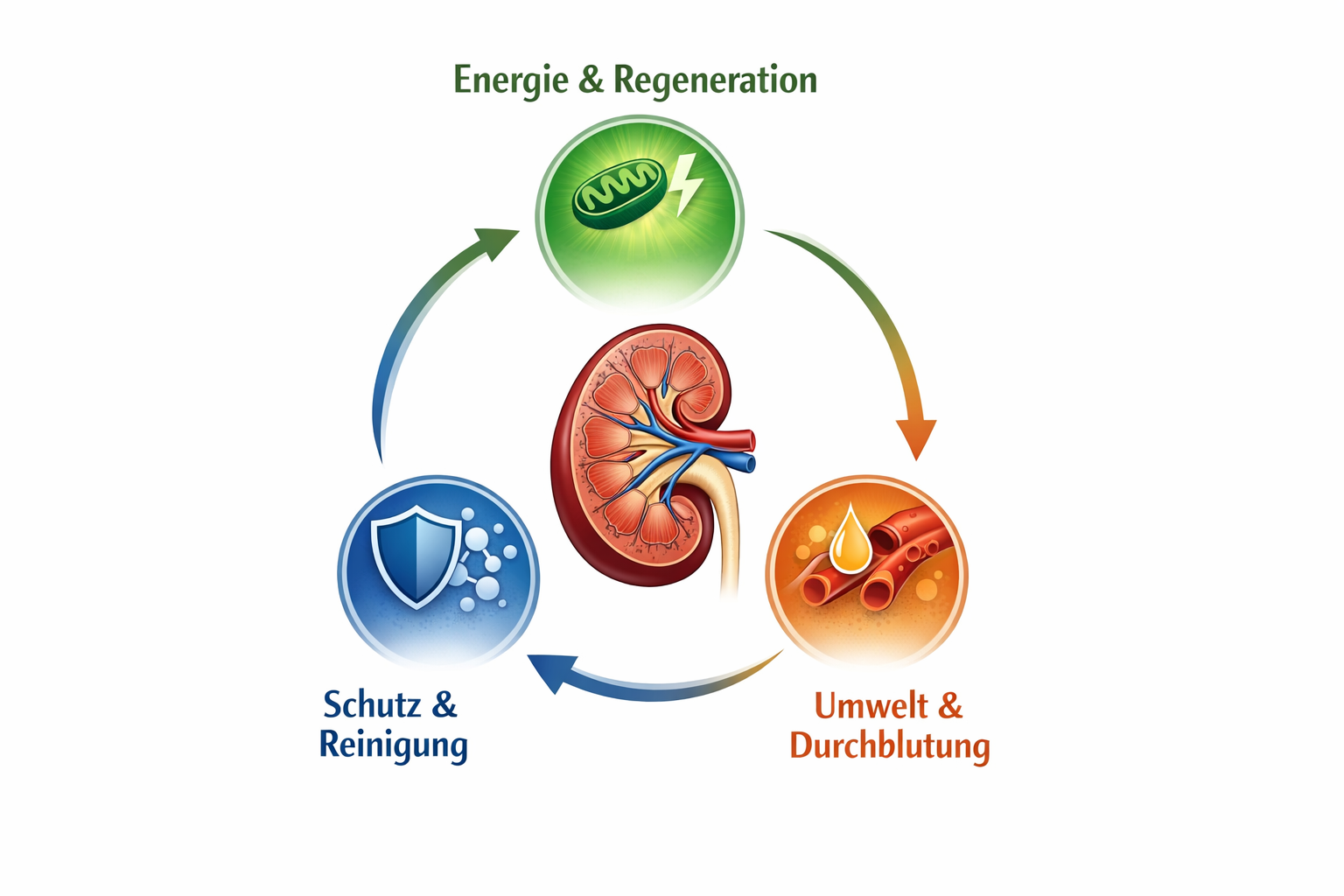
The model is structured around three core axes: energy and regeneration, protection and cleansing, and environment and flow.
This perspective does not replace conventional medical care, but complements it by highlighting the role of intrinsic repair mechanisms.
Chronic kidney disease (CKD) is often understood as a progressive decline in kidney function. However, emerging scientific evidence suggests that beyond tissue damage, the body’s intrinsic regulatory and maintenance mechanisms play a crucial role. This article introduces an integrative model of kidney function, focusing on three key biological domains: energy metabolism and regeneration, cellular protection and detoxification, and blood flow and systemic regulation. For an article by Yaron Margolin that focuses on activating a biological pathway with resveratrol and "light physical exercise"-Here
🧠 Introduction
The kidney is often viewed as a filtration organ. In reality, it is a complex metabolic system that depends on a finely tuned balance between energy supply, blood flow, cellular cleansing, and hormonal signaling.
Chronic kidney disease is characterized by:
mitochondrial dysfunction
oxidative stress
progressive fibrosis (29,32)
Conventional clinical approaches primarily focus on slowing disease progression (30).
However, growing scientific evidence suggests that cellular maintenance and regenerative mechanisms play a critical role in influencing disease trajectory.
Figure: Schematic representation of the central biological axes — energy and regeneration, protection and cleansing, and environment and flow — that contribute to the maintenance of kidney function and other organ systems. Yaron Margolin.
🔋 Axis 1: Energy and Regeneration
Mitochondrial dysfunction is a central feature of CKD (1,2).
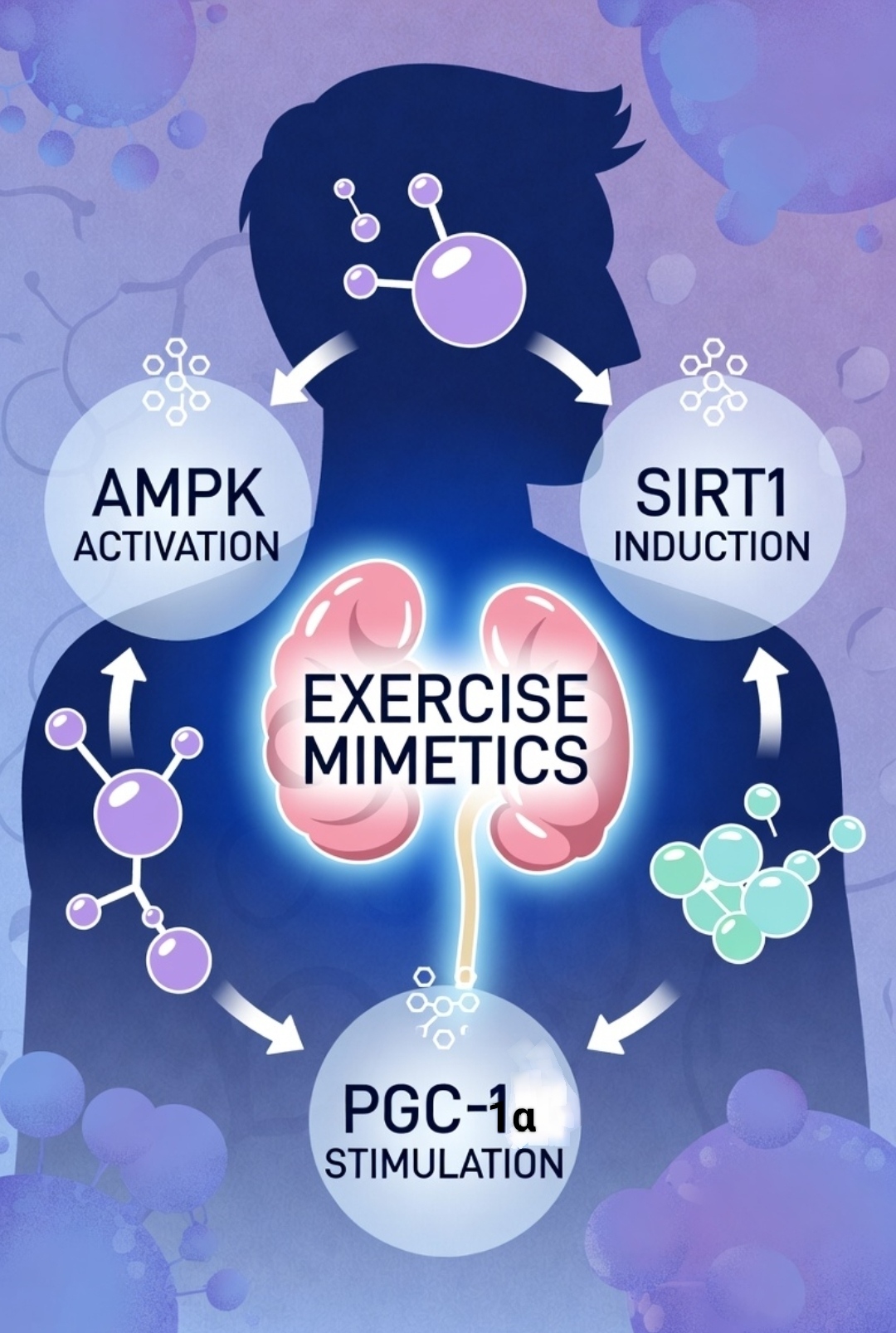
AMPK acts as a key energy sensor, and its activation is associated with improved cellular function and reduced oxidative stress (3).
NAD⁺ enables the activity of SIRT1, which contributes to protection against inflammatory and oxidative damage (5,10). PGC-1α is a central regulator of mitochondrial biogenesis (6), while FOXO is involved in the expression of genes related to cellular protection and survival (8,9).
Interventions such as intermittent fasting and physical activity have been associated with the activation of these pathways (4,7). (in simple terms: states that mildly challenge energy balance may help “switch on” cellular adaptation systems)
🛡️ Axis 2: Protection and Cleansing
The Nrf2 pathway is a central regulator of antioxidant defense (11), and its activation has been associated with reduced kidney damage (12).
Reduced autophagy contributes to the accumulation of cellular damage and disease progression (15,13).
Autophagy and mitophagy enable the removal of damaged cellular components and support the maintenance of cellular homeostasis (16). (in simple terms: the cell’s internal “cleaning and recycling” system)
TFEB acts as a key regulator of cellular clearance systems (17), while autophagy remains fundamental for cellular integrity (18,14).
🌊 Axis 3: Environment and Flow
Nitric oxide (NO) plays a central role in regulating vascular tone and blood flow (19). Endothelial dysfunction is closely associated with CKD progression (20).
The RAAS system is essential for blood pressure regulation, but its chronic activation contributes to renal fibrosis (21,22).
Hypoxia is a key driver of kidney damage (23), while HIF-1α enables cellular adaptation to low oxygen conditions (24).
In addition, the gut–kidney axis influences toxin load and systemic inflammation (26,27). Metabolites such as TMAO have been associated with cardiovascular and renal damage (28).
The TGF-β pathway is directly involved in the development of renal fibrosis (25).
Scientific evidence suggests that targeted and well-adapted interventions may support these fundamental maintenance and repair mechanisms.
🔄 Discussion
This model represents a conceptual shift: from a damage-centered perspective toward one based on systems of maintenance and repair.
The three axes interact in an integrated manner:
Energy and regeneration → sustain cellular function
Protection and cleansing → prevent accumulation of damage
Environment and flow → create the conditions necessary for recovery
While scientific literature supports each of these mechanisms individually, their integration provides a broader and more practical framework.
⚖️ Clinical Significance
This approach does not contradict standard medical therapy, but rather complements it.
The combination of conventional treatment with the support of intrinsic biological mechanisms may contribute to improved clinical outcomes and open new perspectives in the management of chronic diseases — including those affecting the heart, liver, lungs, digestive system, brain, and kidneys.
Certain natural compounds such as resveratrol, curcumin, and plant-derived bioactive substances (e.g., quercetin) are discussed in the scientific literature as potential modulators of these pathways.
Resveratrol, in particular, has been associated with pathways involved in cellular stress adaptation and metabolic regulation.
🌿 Illustrative Examples
🛡️ Protection and Cleansing
One example is the activation of antioxidant defenses via the Nrf2 pathway.
Sulforaphane, found in broccoli sprouts, has been associated in research with activation of this system and enhanced cellular protection against oxidative stress.
🔋 Energy and Regeneration
Another example relates to cellular energy metabolism.
Resveratrol has been associated with activation of SIRT1 and improved mitochondrial function, potentially contributing to energy balance stability.
🌊 Flow and Functional Environment
Vascular function is also critical.
Nitric oxide (NO) is essential for vascular dilation and proper kidney perfusion.
Plant-based foods such as prickly pear (Opuntia ficus-indica) are being investigated for their potential effects on metabolism and vascular function.
🧠 Additional Perspective (based on reader feedback)
A recurring point in reader responses is the desire for concrete examples of how these biological mechanisms can be supported in daily life.
This highlights an important aspect: understanding mechanisms alone is not sufficient — what matters is translating them into meaningful contexts.
For example:
Certain plant compounds are studied in relation to the activation of cellular defense systems.
Metabolic adaptations, such as those induced by physical activity or periods of reduced energy intake, are linked to cellular energy regulation.
Maintaining vascular health directly influences blood flow and oxygen delivery to the kidneys.
These examples are not intended as therapeutic prescriptions, but rather to illustrate how closely lifestyle factors are connected to biological regulatory systems.
🔚 Closing Perspective
This perspective suggests that even fundamental aspects of lifestyle may influence how effectively intrinsic regulatory mechanisms operate.
🌱 A Path of Hope
Recovery may be possible. This work invites a shift in perspective — toward knowledge, awareness, and a deeper understanding that the body possesses the capacity for adaptation and regeneration.
⚠️ Disclaimer
All information presented here is intended for educational and conceptual purposes. It does not replace medical advice. Always consult a qualified healthcare professional before starting, modifying, or discontinuing any treatment.
Direct activation of Klotho; podocyte protection; anti-inflammatory effects
Vitamin D3 (monitored dosing); controlled sun exposure
Brain, heart, lungs, gut, bone
✔ Note: The pathways and interventions listed are based on associations reported in scientific literature and are presented for conceptual and educational purposes. They do not constitute medical recommendations.
Nath KA. Tubulointerstitial changes as a major determinant in chronic kidney disease. Kidney Int.
Friedman SL et al. Mechanisms of fibrosis across organs. J Clin Invest.
YaronMargolin 2025. Photographed by Yuri Margolin, Thailand, Pattaya.
Forsupport, inspiration, and success stories, visit yaronmargolin.com or explore the healing touch method at yaronmargolin.com or the "לחיצות ההחלמה" To contact us.
Important Note The information presented here is for educational and philosophical purposes only and does not replace medical advice. Always consult a licensed healthcare provider familiar with your individual health status before making changes to your regimen.