


ירון מרגולין מאסטר בהחלמת הכליות
Chronic kidney disease (CKD) has long been considered irreversible. In classical medicine, the term "progressive" is almost synonymous with kidney disease—a one-way journey where the body's filtering capacity declines, toxic substances accumulate, and ultimately the patient faces dialysis or transplantation.
Yet, the human body—when provided the right conditions—can surprise us.
This article presents a rare, well-documented, and inspiring case of a 66-year-old man who chose a natural healing path without suppressive medications or aggressive interventions, clearly aiming to avoid dialysis. Over several months, a distinct trend of true kidney recovery was observed: creatinine levels declined, eGFR improved, urea decreased, inflammation stabilized, and uric acid was reduced—all alongside deep tissue cleansing processes.
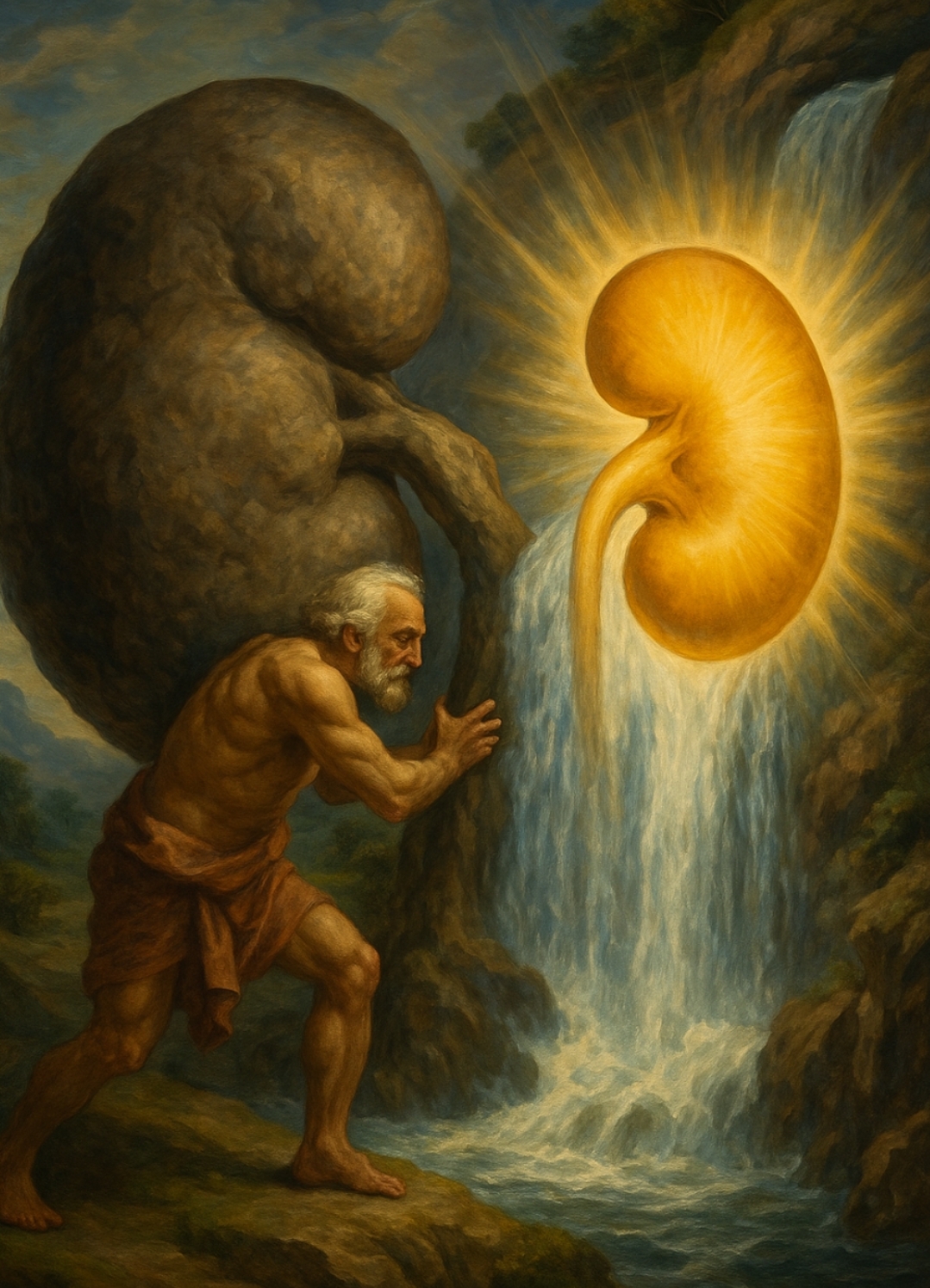
Why share this case?
The publication honors 25 years during which I have accompanied chronic kidney patients. This individual is the 800th patient I have supported throughout my career. Each case was unique, providing new insights into the body’s remarkable ability to heal. This particular case is noteworthy for the relative simplicity of its etiology and the clear, rapid laboratory evidence of profound healing mechanisms in real time.
Metabolic Distinctions: Diabetic Kidney Disease vs. Gout and Insulin Resistance Kidney Disease
The majority of CKD cases in Western populations stem from diabetes, a condition where hyperglycemia directly damages capillaries, filtering membranes, and excretory systems. This damage accrues slowly, culminating in structural impairment known as glomerulosclerosis.
This case diverges significantly.
Here, kidney disease emerged from a combination of:
- Persistently elevated uric acid (metabolic gout)
- Moderate insulin resistance
- A borderline abnormal triglyceride to HDL cholesterol ratio (~2.2)
This metabolic constellation represents a fundamentally different pathogenic pathway compared to diabetic kidney disease.
In gout- and insulin resistance-associated CKD:
- Damage derives primarily from chronic low-grade inflammation, oxidative stress, mitochondrial overload.
- It is more functional than structural, allowing potential for recovery if body repair mechanisms activate swiftly.
Therefore, the nature of kidney damage here is more interesting than typical diabetic nephropathy. This paradigm shift necessitates distinct therapeutic approaches. Notably, the kidney entered a healing trajectory within three months, rendering this case exceptionally instructive.
Insulin Resistance’s Impact on Renal Health
Insulin resistance denotes diminished cellular responsiveness to insulin, provoking compensatory hyperinsulinemia. This state may precede overt hyperglycemia, thus often going undiagnosed.
How insulin resistance harms kidneys:
- Chronic inflammation: Prolonged hyperinsulinemia activates inflammatory pathways (e.g., NF-κB), damaging renal microvasculature.
- Uric acid accumulation: Insulin impairs renal uric acid excretion, increasing nephrotoxic uric acid load.
- Mitochondrial dysfunction: Excess insulin disrupts mitochondrial energy metabolism, impairing nephron function.
- Dyslipidemia: Elevated triglyceride/HDL ratio reflects metabolic dysfunction impacting renal health.
In this case, the kidney damage was primarily metabolic and functional rather than deeply structural. The key point is that the solution lies in overcoming the inflammation. Moreover, pharmaceutical treatments may harm the intestinal microbiome, making this case not only rare but also extremely interesting
Evidence of Kidney Function Improvement
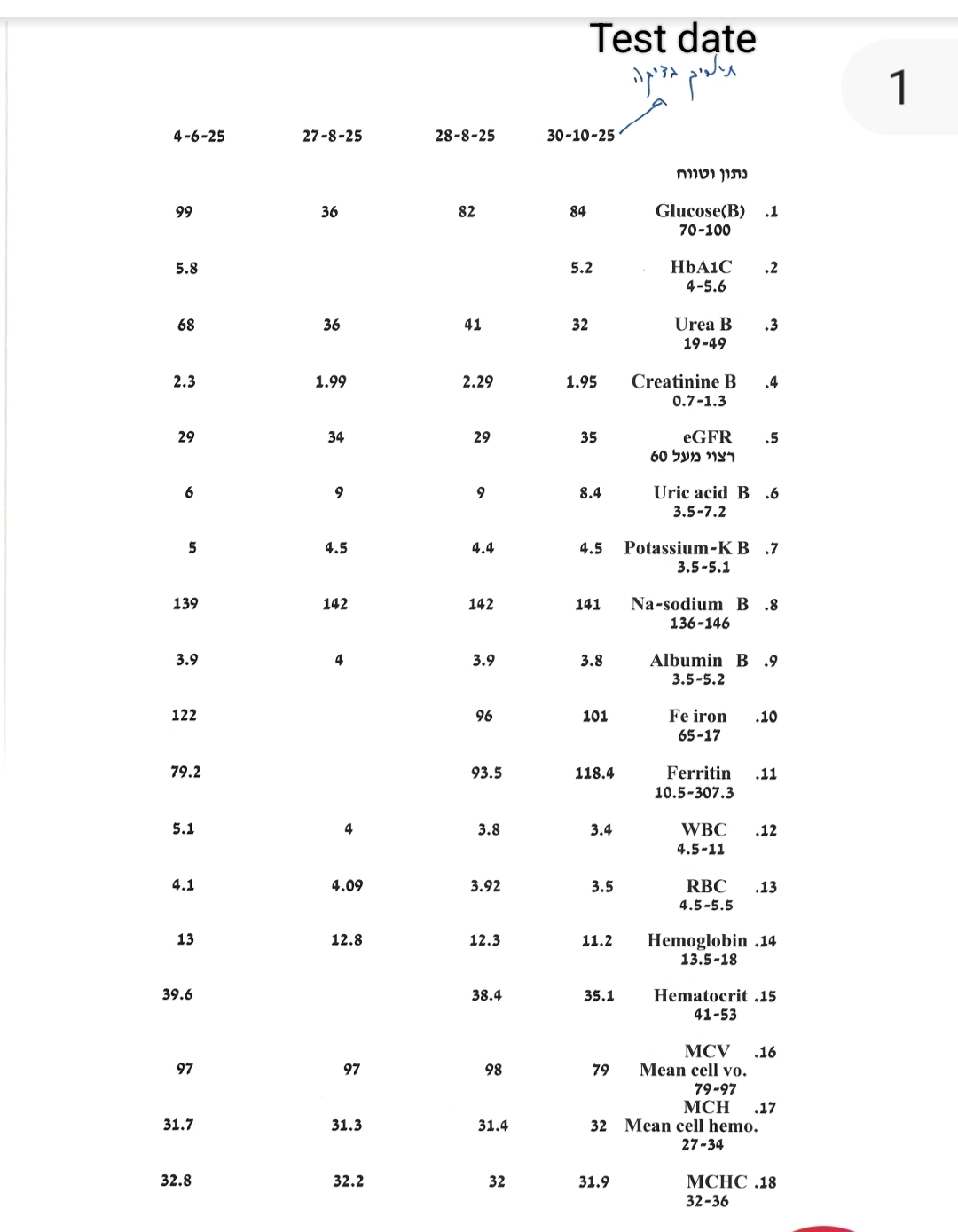
Laboratory data comparison:
| Date | Creatinine (mg/dL) | eGFR (ml/min/1.73 m²) | Urea (mg/dL) | Albumin (g/dL) |
|---|---|---|---|---|
| 4 June 2025 | 2.3 | 29 | 68 | Normalizing |
| 30 Oct 2025 | 1.95 | 35 | 32 | 3.8 (within normal range) |
Blood glucose remained stable, HbA1c was normal, and electrolyte balance maintained.
These results indicate a genuine trend of disease halt and reversal rather than transient fluctuation.
Clinical significance includes:
- Reduced nitrogenous accumulation
- Decreased skeletal muscle catabolism
- Restored microvascular perfusion
- Mitigation of inflammation
- Enhanced glomerular blood flow and endothelial restoration
- Mitochondrial functional recovery
Collectively, these confirm decreasing uremic load, improved renal hemodynamics, normalized intra-renal pressure, and strengthened glomerular filtration.
Uric Acid Levels Decline Naturally Without Pharmacologic Intervention
Uric acid is a highly sensitive metabolic biomarker:
| Date | Uric Acid (mg/dL) | Notes |
|---|---|---|
| 4 June 2025 | 6 | Under allopurinol treatment |
| Late August 2025 | 9 | Rebound effect after allopurinol cessation |
| 30 Oct 2025 | 8.4 | Natural decrease without medication |
The transient rise to 9 mg/dL was anticipated post-drug cessation. The subsequent natural decline signifies:
- Improving metabolic balance
- Inflammation attenuation
- Protection of ATP stores
- Endothelial cell repair
- Capillary structural reinforcement
This confirms reactivation of endogenous healing pathways.
Hematologic Findings: Marrow Fatigue with Active Repair
Blood examination most directly reflects systemic tissue conditions in CKD.
Key observations:
- Hemoglobin decreased from 13.7 to 11.2 g/dL, consistent with anemia of chronic disease rather than iron deficiency.
- Leukocytes at 3.4×10^9/L reflect marrow stress and systemic fatigue.
- Slightly elevated monocytes denote active repair within mucosal linings, vasculature, and endothelium.
- Platelet count at 157×10^9/L with elevated mean platelet volume (MPV=13 fL) indicates production of large, young, biologically active platelets rich in pro-reparative factors and microRNAs.
Significance of Large Platelets in Tissue Repair
- Large platelets are freshly-generated in response to stimulation of repair mechanisms.
- They harbor potent growth mediators such as PDGF, VEGF, and TGF-β essential for angiogenesis and tissue restoration.
- They provide naturally balancing anti-inflammatory factors, optimizing immune responses without excess.
- The bone marrow’s focus shifts toward vascular and tissue repair rather than merely augmenting red blood cell mass, explaining the anemia amidst active regeneration.
This platelet profile strongly indicates ongoing biological recovery rather than decline.
Increased Proteinuria as a Marker of Tissue Detoxification Rather Than Damage
Protein excretion in urine increased transiently to 2489 mg/day despite improving biochemical profiles.
Though normally alarming, this pattern here indicates:
- Clearance of trapped, oxidized proteins, advanced glycation end-products, LDL oxidation residues, and chronic inflammatory deposits, mobilized during tissue repair.
- Enhanced blood flow, reduced inflammation, and cellular cleanup facilitate this flushing process.
Thus, increased proteinuria reflects tissue detoxification, not worsening injury.
Vitamin D: A Biological Key to Kidney Healing
Vitamin D serum levels rose from 7 to 24 ng/mL.
Deficiency impairs:
- Erythropoietin production, hindering hemoglobin synthesis
- Glomerular repair mechanisms
- Reduction in proteinuria and inflammation
The upward trend signals hormonal and regulatory recovery, enabling anemia-targeted therapies.
Integrating All Findings: A Paradigm Shift
Assembling all data:
- Decline in creatinine
- Improvement in eGFR
- Reduction in urea
- Natural decline in uric acid
- Appearance of large, young platelets
- Restoration of vitamin D levels
- Decrease in systemic inflammation
- Transient proteinuria elevation reflecting clearance
Together these demonstrate a transformative biological state:
The kidney is undergoing genuine, thorough regeneration.
The body orchestrates removal of long-standing toxins, repair of capillaries, and functional restoration of filtration.
This intricate, layered process proceeds cell-by-cell, capillary-by-capillary.
It is irreversible once initiated and requires ongoing supportive management to sustain without exposure to additional uremic toxins.
Conclusion
This rare, extensively documented instance of kidney regeneration offers profound evidence against the long-standing belief in inevitable CKD progression.
Human physiology harbors potent intrinsic healing capabilities [source].
When appropriately supported, these mechanisms can awaken [source], offering tangible hope and clinical strategy advancement for kidney disease patients worldwide.
If you require, When appropriately supported, these mechanisms can awaken, offering tangible hope and clinical strategy advancement for kidney disease patients worldwide.
Have questions?

His documented cases demonstrate significant improvements in kidney function markers such as decreased creatinine, improved eGFR, reduced urea and uric acid levels, and stabilized inflammation—all without suppressive medications or dialysis. He highlights the importance of addressing metabolic imbalances like insulin resistance and elevated uric acid as key modifiable factors in fostering kidney repair [source].
Margolin’s approach brings a paradigm shift for nephrology by showcasing that CKD can be halted and reversed through natural, systemic healing mechanisms, supported by strategic lifestyle, nutritional, and possibly physical interventions.
His work has inspired many patients and healthcare providers to reconsider the potential for kidney regeneration beyond classical treatments.
He is considered a leading figure in this emerging field due to his extensive experience, pioneering methodology, and documented patient recoveries.
For more detailed information, his official website and public writings contain extensive documentation of his approach, clinical cases, and related healing philosophies
Yaron Margolin will be happy to answer — with clarity, care, and no false promises.Just real knowledge, hope, and a clear path forward.
For the avoidance of doubt, consult a physician (who knows in detail the general health of each patient or yours) before using any medicine, food, extract or any exercise. The information on Yaron Margolin's website or the "Healing Presses" website (on Facebook or YARONMARGOLIN.COM), in the above article and in Yaron Margolin's articles are material for thought – philosophy neither recommendation nor public guidance to use or cease to use drugs – no information on this site or anyone You should always consult with a qualified physician or pharmacist regarding pain, bad feeling, or goals and how to use foods, ointments, extracts and even exercises, or other remedies that are mentioned as such
More articles
- Natural Kidney Regeneration: A Revolutionary Case Study Challenging Chronic Kidney Disease Irreversibility
- The Three Most Important Supplements for People Over 55 — A Natural and Cautious ApproachBy Yaron
- Kidney FailureTaming the Rogue KidneysVital Information
- אילוף הכליות הסוררות
- Learn the 8 Principles That Revive Kidney Function
- My Dick Won’t Get Hard — What Can I
- Reconstruction of erythropoietin by the kidneys without drugs
- Six degrees of guilt – Why do people avoid living their dreams?
- Of sexual desire and the wish for intimacy and the two different languages in which they materialise:
- מוכרחים להתחיל בדיאליזה טרם נבחנה רמתו של גורם צמיחה פיברובלסט 23
- The day will come when we will sit in front of the fireplace
- איך לא להגיע לדיאליזה
- "הצלבת איברים – הדרך להחלמה ממחלת כליות קשה מאוד" – כאן..
- פחות מתים – טכניקת דיאליזה חדשה שבולמת את קצב המתים ומגבירה את ההישרדות בכשל כליות.
- הערכות שונות במדידת אשלגן בפלזמה שוללות לפעמים שלא בצדק יתר אשלגן בה – היפרקלמיה פסאודו היפרקלמיה – Hyperkalemia
כתיבת תגובה